DNA
(Talk given to Harrow U3A Science Group 19 Oct 2006)
DNA- The Path to the Double Helix
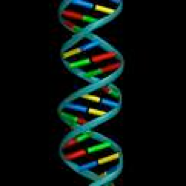
Barely a day passes without some lurid headline claiming that a DNA discovery will enable us all to live to 120. Or that mucking about with DNA and genes will mean the end of humanity. Well, let’s see how this DNA thing came about.I would like to say something about the history that led up to its discovery, and something about the many scientists who were involved.
In April (2006) my wife and I crossed the Atlantic to New York by QM2. It was a six night journey and, to put it mildly, it was quite luxurious. Apart from provision for bodily comforts there were a series of lectures given by four lecturers from Oxford University and other prestigious institutions. There were lectures on marine subjects, history, architecture and, what interested me most, a series on Darwin given by Dr Andrew Berry, a research associate at Harvard’s Museum of Comparative Zoology. But Darwin is not my subject today.
Dr Berry has co-authored with James Watson (of Watson & Crick fame) a book called DNA The Secret of Life. On the ship I spent time talking to him. To some extent it was about Darwin and ID (Intelligent Design) but chiefly about the implications, beneficial or dangerous, of developments in DNA. And, of course, the question of whether scientific and technological research should, or could, be controlled. [My understanding is that Watson’s attitude is said to be that there should be no restrictions whatsoever on scientific research].
I explained my involvement with the Science Group of Harrow U3A, and that I occasionally give talks, or lead discussions, on the consequences of scientific developments. When he autographed my copy of the book, Dr Berry wrote that he hoped the book would be useful. Well, it is, and I am indebted to his book for some of my material today.
“ DNA – The Path to the Double Helix”sounds very pretentious, so I should say at the start that I am not qualified to give very detailed technical information about the precise intricacies of what goes on in a string of DNA when it gives instructions to create the proteins that start the process that ends up with a flower, a fish, a bird, - or you and me....or a precise technical detailed description of how DNA passes on that information from one generation to another. But I’ll do my best to give an outline of the history that lead up to that fateful day, 53 years ago in 1953, when the American science magazine Nature included a paper by James Watson and Francis Crick suggesting and describing , humbly, the structure of deoxyribonucleic acid, - DNA to us.
Let's start with Heredity.Very primitive people probably did not at first associate birth with a particular earlier sexual intercourse. Children were considered children of the group and who the father was, was perhaps irrelevant. When the family unit developed, children would be linked to particular fathers and mothers. The Greeks had a theory of “pangenesis”.It was thought that the father’s seminal fluid contained, in tiny invisible miniaturised parts, the complete bits of the body of the child, and the mother merely provided the fertile soil for it to assemble and grow. Another theory was that the complete miniature child was transferred to that fertile soil. The development of microscopes that our Robert Hooke learned from the Dutchman Leevanhoek, killed both those theories. It was obvious that the mother carried the unborn child, but the part the father played was very uncertain. It was noticed that there were “family characteristics” for good or ill, but they would have been brought about by God’s benevolence or wrath, or by the devil’s mischievous intervention. Any child was useful, particularly for support in old age, but a male child came to be considered stronger, more useful and more desirable than a female child - and no dowry need be paid. If, after several attempts, no child appeared or, if it did and it was female, macho man, who could not believe it was his fault, blamed the woman for being barren or producing a female child. It was only at the very beginning of the 20th century that it became clear that it was the biological father who determined the sex of the child.
Farmers learned early on that choosing the “best” individual animals to mate with each other, or pollinating the “best” individual plants with each other, produced offspring that were more desirable. At first this must have been a hit or miss affair and they would have no idea why or how it happened, but in due course they became quite expert at it. Today almost every item of food we have on our tables, be it from plants or animals, are the result of the genetic changes that our ancestors, unwittingly, brought about ages ago. It was left to the Austrian monk Gregor Mendel, born in 1866 in what is now the Czech Republic, to publish a paper describing his experiments with peas. He described the order in which the characteristic of the parents determined the characteristics of the offspring, and the statistical order in which they occurred.He knew that “things” or “factors” were transmitted from parent to offspring but he did not know the mechanics that caused it to happen. His work was a breakthrough but it was ignored and it was not until the beginning of the20th century that the scientific community caught up with him.
About the time of Mendel’s death in 1884 improved optical instruments had permitted scientists to discover long stringy objects in the cell nucleus. They called them “chromosomes”. In 1902 it was realised that what Mendel called “factors” were what we call genes which exist on the chromosomes.
They learned that there are 23 chromosomes in the reproductive cells: eggs and sperm, and also, in time, that the reproductive cells from the female (the egg), contain only X chromosomes, but the male reproductive cells (the sperm) contain either X or Y chromosomes.If at fertilisation the egg received Y sperm, the result would be XY, ie male; if it received X you would have XX, ie a female. So it was the macho man who determined the sex of the child, but with some people even today, it is still the wife that gets the blame.If they failed to conceive at all the problem in fact could lie with either, or both, the husband or wife, but still, with some people it is still the woman who is blamed. Consider Henry V111 who not only blamed his wives but sometimes chopped their heads off.
Mutants, i.e. where offspring had characteristics that did not exist in any of its predecessors, were caused by some change in these chromosomes, but how was a mystery.The publication in 1859 of Darwin’s Origin of Species had raised many questions about how the evolutionary changes had occurred, and how characteristics were inherited. It also developed into a discussion about how, or whether, the transmission of particular characteristics, desirable or undesirable, could or should be controlled - what we call “eugenics”. After a a very unsavoury period in Europe during the 1930s and 1940s “eugenics” became a dirty word, but it has arisen again as a result of our ability today to manipulate genes to produce results we want.It is an ongoing and difficult ethical topic.
Many people, perhaps, imagine that DNA was first discovered when the Double Helix was described in 1953.It has, however, had a very much longer history and was known about, but not understood, long before Watson and Crick were born. We can hope that when Watson and Crick were congratulated on their discovery they would have quoted Newton’s comment to Hooke, and say they were standing on the shoulders of giants...
DNA, or deoxyribonucleic acid, is the blueprint for life itself. The discovery of DNA paved the way to an understanding of genetic heritage. But for a molecule with such a grand purpose, DNA had humble beginnings – after it was first identified it languished in obscurity for about half a century.
In the 1860s, a German medical researcher Friedrich Miescher joined the University of Tubingen, Germany. There, at a time when scientists were still debating the concept of a “cell”, their lab was isolating the very molecules that make up cells. Miescher was given the task of researching the composition of lymphoid cells -- white blood cells. These cells were difficult to extract from the lymph glands, but could be gathered in great quantities from the pus from infections. So Miescher collected bandages from a nearby clinic and washed off the pus. He experimented with it and isolated a new molecule – a white, slightly acidic substance that he called nuclein. Isolated from the cell nucleus, nuclein was rich in nitrogen and phosphorus, as well as containing carbon, hydrogen, and oxygen.
When purified it was - Deoxyribonucleic acid - DNA !!— Miescher’s paper on nuclein was published in 1871, over 80 years before the “double Helix” of 1953. Scientists were sceptical because nuclein was such a unusual molecule, but repetition of all the experiments confirmed the results. Around the time of Miescher’s discovery, the Austrian monk Gregor Mendel and British scientist Charles Darwin were both publishing works on the theories of genetics and evolution. But no one suspected that Miescher’s new compound was the key to all this. DNA was in the right place to control our heredity -- in the chromosomes inside the cell’s nucleus -- but it was such a simple molecule that some doubted it had any function at all.
Proteins in the chromosomes of cell nuclei were considered much better candidates for carrying the information necessary to build a living organism. Miescher himself, though he continued to work on “nuclein’ for the rest of his career, believed that proteins were the molecules of heredity. Part of the problem was that proteins were already known to be important as the enzymes and structural components of living cells. They are made up of a combination of 20 amino acids, an “alphabet” that could be configured into many different ways to convey a lot of information. DNA, on the other hand, is much simpler. It consists of the sugar deoxyribose, plenty of
phosphate, and only four bases: adenine, thymine, cytosine, and guanine, or A, T, C, G. Early studies of DNA had erroneously suggested that the four bases were always repeated in the same order, such as ATCG ATCG ATCG etc etc., but we know better.
We now jump to the 1920s when new experiments began to point the genetic finger at DNA. English bacteriologist Fred Griffith was working with two strains of the pneumonia bacterium: one was a virulent wild strain which could kill, and the other a harmless mutant that did not kill. Griffith killed some of the virulent strain by boiling them thus rendering them harmless. But when he mixed the dead virulent bacteria with the live harmless mutant, he found that the harmless mutant somehow gained the capability to kill. The dead virulent bacteria apparently provided some chemical that transformed the harmless bacteria to infectious ones. They called this the “transforming principle”; and it is now known to be a gene.
In the 1940s, a team of scientists led by Oswald Avery at the Rockefeller Institute followed up on these experiments and showed clearly that the “transforming principle”, and thus genes, are made of DNA. Many scientists were slow to accept this as proof that DNA, not protein, is the genetic molecule, but Avery’s results did push them in the right direction.
Researchers then found that different species each have different relative amounts of A,T,C and G. They also found that in DNA the ratio of As to Ts and Cs to Gs was always the same, suggesting that each pair of bases are somehow connected.
And now we come to our friend Erwin Schroedinger. He was an Austrian who had escaped when the Germans took over Austria. In 1943 he published a small book called “What is Life” in which he argued that life could be thought of in terms of storing and passing on biological information and that chromosomes were the information bearers.
As so much information had to be packed into every cell it had to be compressed into what Schrodinger called an “hereditary code-script“ embedded in the molecular fabric of chromosomes. To understand life, he said, we would have to identify those molecules and crack their code. He was well known as a theoretical physicist and it was surprising that he had taken this interest in chemistry and biology. Both Watson and Crick had, independently of each other, read that book and the book influenced their subsequent investigations into genes. Erwin Schroedinger, of course, is the man whose cat may be alive or may be dead, or perhaps both dead and alive at the same time.
Now a somewhat lighthearted poem about him by Cecil Adams, and slightly modified by me:
Schroedinger, Erwin! Professor of physics!
Wrote daring equations! Confounded his critics!
Win saw that the theory that Newton'd invented
By Einstein's discov'ries had been badly dented.
What now? wailed his colleagues.
Said Erwin, "Don't panic,
No grease monkey I, but a quantum mechanic.
Consider electrons. Now, these teeny articles
Are sometimes like waves, and then sometimes like particles.
If that's not confusing, the nuclear dance
Of electrons and suchlike is governed by chance!
No sweat, though--my theory solves it becos
Where some of them is, the rest of them was."
Not all were pleased. It threatened to wreck
The comforting linkage of cause and effect. Even Einstein had doubts, and so Schroedinger tried
To tell him what quantum mechanics implied.
Said Win to Al, "Brother, suppose we've a cat,
And inside a tube we have put that cat at.
And, oh, if you can get at ‘em,
A jar of prussic acid, and one decaying atom
Or whatever—and, when it emits,
A trigger device blasts the jug into bits
Which snuffs our poor kitty. The odds of this crime
Are 50 to 50 per hour each time.
The cylinder's sealed. The hour has passed.
Is our pussy still purring—
or has puss purred her last?
Now, you'd say the cat either lives or it don't
But quantum mechanics is stubborn and won't.
Statistically speaking, the cat (goes the joke),
Is half a cat breathing and half a cat croaked.
We may not know much, but one thing is so:
There's things in the cosmos that we cannot know.
Shine light on electrons--you'll cause them to swerve.
The act of observing disturbs the observed--
Which ruins your test. But then if there's no testing
To see if a particle's moving or resting
Why try to conjecture? Pure useless endeavour!
We know probability--certainty, never.'
The effect of this notion I very much fear
Will make doubtful all things that were formerly clear.
Till soon the cat doctors will say in reports,
"We've just flipped a coin and we've learned he's a corpse."'
Agreed said Herr Erwin .Said Albert,
"You're mad, God doesn't play dice with the universe, lad.
I'll prove it!" he said, and the Lord knows he tried
-- In vain--until finallly he, more or less, died.
Win spoke at the funeral: "Listen, dear friends,
Sweet Al was my buddy. I must make amends.
Though he doubted my theory, I'll say of this saint:
Ten-to-one he's in heaven--but five dollars he ain't."
--CECIL ADAMS (Slightly modified)
Now, back to our subject. During the late 1940s, advances in X-ray diffraction techniques had allowed scientists like Maurice Wilkins and Rosalind Franklin at King’s College, London to look directly at DNA. These showed that DNA probably had the corkscrew structure of a helix but whether it was a single, double or triple helix was unknown. And then, in 1953, James Watson and Francis Crick published in the US prestigious magazine Nature their famous paper humbly suggesting the structure of DNA.
After building successive scale models of possible DNA structures, they had deduced that it must take the twisted-ladder shape of a double helix.The sides of the ladder consist of a “backbone” of sugar and phosphate molecules. The nitrogen-rich bases, A, T ,C & G form the “rungs” of the ladder on the inside of the helix. They discovered that base A would only pair with T, while G would only pair with C. This is known as
complementary base pairing, and neatly explains DNA’s equal amounts of A and T, or G and C.
They noted in their paper that complementary pairing pointed out an obvious way to copy DNA. The helix “unzipped”, breaking the rungs of the ladder in half so that the molecule separates down the middle. New bases can then hook up with complementary bases along each strand and join together to form the other side of the ladder. The unzipping proceeds, the new strands continue to grow, and one DNA molecule becomes two identical DNA molecules, [and then to you and me].
It, of course, created a sensation. Any one of us who was born before 1940 or so will no doubt remember the newspapers sensationalising the discovery, and many will remember reading their book “The Double Helix” which was a best seller. The first edition generated some surprise by denigrating Rosalind Franklin and the importance of her work. A subsequent edition put the record straight and she has now received the credit she deserved. Unfortunately, as a result of her X-ray research, she developed cancer and died at the young age of 37 before she could share in the Nobel Prize that Watson and Crick later received.
Let us backtrack a little and try to summarise“The Race for DNA”.
The 25th April 1953 publication in Nature marked a pivotal moment in modern scientific history. It ushered in many fundamental advances in many fields ranging from genetics and evolutionary theory, to biochemistry and medical research.But it also marked the finish of a legendary race. The winners were, of course, the young Watson and Crick, but there were many other participants in the race. Among them were Sir William Bragg, head of the Cavendish Laboratory in Cambridge, Wilkins and Franklin at King’s College, and in particular the American scientist Linus Pauling of Caltech USA who had revolutionised the study of chemistry.
Since the 1920s Bragg, who was a leading authority on the structure of bio- molecules, and Pauling, the world’s leading chemist, had competed for scientific priority, but it was Pauling who had won the Nobel Prizes. Incidentally, later on in 1962, Pauling won also the Nobel Prize for Peace. Watson and Crick had learned much from Linus Pauling. Both Bragg and Pauling were focussed on proteins as being the master molecule of life and by the early 1950s there was a race between the two sides of the Atlantic to solve the DNA puzzle.
In 1944 Oswald Avery, a researcher at the Rockefeller Institute in USA, had found that DNA, apparently by itself, could transfer genetic traits, but for years no one had paid much attention. Pauling knew about it but did not accept it. At that stage he thought more of the alpha helix in protein rather than nucleic acid as being the hereditary material.
In 1952 the race was becoming neck and neck. It was becoming clear that DNA, and not the protein, was the hereditary material. Pauling had already started working on DNA, although he was thinking of a triple helix. He learned that DNA X-ray photos had been produced by the crystallography expert Rosalind Franklin who was working with Maurice Wilkins at King’s College. Pauling asked Wilkins if he could see those photos but Wilkins, for his own reasons, did not supply them. It is thought that if Pauling had asked Franklin she would probably have let him see them even though she may have liked to keep them for her own experiments! We know that those photos were vital to Watson and Crick in their later discovery of the structure of the double helix.
It is thought quite possible, or even probable, that if Linus Pauling had the information in those X-ray photos he would have realised it must be a double helix. With the consequences of that, and with his other knowledge, he would have been the first to publish the paper. Watson and Crick however - I think perhaps unofficially - did get to see the photos first. They realised the significance but did not disclose the information to Pauling. Consequently, they were the first to publish and received the Nobel Prize.
Should we consider whether there is an ethical question there about non-disclosure of scientific knowledge? Is a scientist entitled to keep information secret to ensure he is the first to publish the paper? What if he knows that another scientist, with that particular information, would advance scientific knowledge that much earlier? Is that even more important in medical research where earlier spread of knowledge could perhaps save lives? Must a scientist– even, perhaps, towards the end of a life’s work - be that altruistic and lose the chance of fame?
Does it mean the public should be made more aware of the giants on whose shoulders discoveries have been made? Unfortunately the public needs heroes, and role models, and the first-past-the-post system satisfies that need.
Incidentally, politics intervened in the history of DNA. In 1951 Pauling applied for a passport to enable him to travel to Europe to attend an important conference in his field. It was the time of McCarthy and the passport was refused on the grounds that he was or had been a communist. Apparently he was not, but that is not really relevant. In 1952 he was granted a limited passport provided he signed an affidavit denying membership of the Communist party. Whether all this had any effect on his research is unknown, but it shows some of the pressures scientists were subject to.
Now, back to DNA itself.
With a few exceptions, every cell in our body contains DNA, and every cell needs to copy its DNA each time it divides. In a complicated organism like humans, who have a total of about 3 billion base pairs of DNA, this copying process takes about eight hours. Reading the same sequence aloud -- even at a speedy rate of 10 bases per second -- would take about 9.5 years.
Now, what does DNA actually do. Well, actually DNA itself does very little, if anything. What happens is that, in code form and via the nucleic acid RNA that exists in the cell, it passes on instructions for the creation, out of 20 different amino acids, of proteins which will carry out our bodies’ activities. And that code is in the form of the order in which the 2 pairs of the base chemicals A...C...G...T... are set out along the DNA.
It was discovered that messenger RNA also has the ability to store genetic information and it is thought that RNA was the earlier molecule of heredity, and evolved all the essential techniques for storing and expressing genetic information. But by evolutionary selection DNA took over as it is a more stable structure having less oxygen in the sugar. Hence “Deoxy”- ribonucleic acid...
Not all of our DNA makes genes. Most DNA consists of long, repetitive sequences of ‘junk’ DNA, with no known purpose. It may even interrupt the protein coding regions within genes. It is estimated that only about 5% of human DNA actually encodes proteins.
The essential difference with Watson and Crick’s model was that the DNA structure was a sort of ladder with base pairs as the steps and a sugar-phosphate backbone as the runners of the ladder. It all formed easily into a helix that matched the X-ray data. Each strand was a complementary mirror image of the other and if separated could act as a mould for forming a new double helix identical with the original.
This provided a means of replication which Pauling’s model, with its bases facing out and unrelated to each other, could not. Pauling’s model was built inside out with the wrong number of chains.Pauling gracefully and generously agreed that Watson and Crick had the answer, and they got the prize.
Now, who were the many other actors in this drama – scientists who got no Nobel prizes.One can name a large number of scientists who were the pre-cursers to the discovery of the structure of the double helix.I have already mentioned Mendel, Darwin, Watson and Crick, Fred Griffith, Oswald Avery, Erwin Schroedinger, Linus Pauling, Rosalind Franklin, Maurice Wilkins, and William Bragg.
Let me mention some of the others who were also involved but who will presumably not get the credit they deserve. Whether they warrant being called the giants on whose shoulders the Double Helix was discovered, I cannot say. But they made essential contributions to its discovery.
William Astbury (1898-1961) a molecular biologist, made the first step in1937 towards the elucidation of the structure of DNA. Then, Phoebus Levene who emigrated from Russia to escape pogroms. He was a biochemist and in 1910 he first proposed that DNA was made up of equal quantities of adenine, guanine, cytosine and thymine..His ideas about the structure of DNA were, however, wrong. His hypothesis that DNA was composed of a large number of repeats of AGCT was disproved by Chargaff.
Erwin Chargaff (1905-2002) was an Austrian biochemist, who moved to New York in 1935. He discovered the two rules that helped lead on to the discovery of the double helix. He showed that in natural DNA the number of guanine units is equal the number of cytosine units, and adenine units the number of thymine units. His second rule is that the composition of DNA varies from one species to another.
Max Delbruck(1906-1981), a refugee from Germany, was one of the most influential people to get physical scientists to move into biology during the 20th century. Delbruck's thinking about the physical basis of life stimulated Erwin Schrödinger to write the highly influential book, What Is Life? And we know that Schrödinger's book was an important influence on Francis Crick, James D. Watson and Maurice Wilkins.
Jerry Donohue (1920-1985)was a theoretical and physical chemist, who gave Watson and Crick ideas which steered them towards the correct structure of DNA. Raymond Gosling worked with both Maurice Wilkins and Rosalind Franklin at Kings College London on X-ray diffraction leading to deducing the structure of DNA.
Sir John Randall. (1905-1984), Physicist. He led the Kings College team that worked on the structure of DNA. Incidentally he made radical improvements to the cavity magnetron which was vital to the Allied victory in WW2. It allowed small high quality radars to be installed in aircraft to detect other aircraft . Our Beaufighter aircraft were thus able to shoot down large numbers of German bombers at night. To deceive the enemy, false secrets were leaked that the pilots were being fed enormous amounts of carrots which permitted them to see enemy bombers at night. Carrots do apparently increase night vision but not quite that much! Incidentally, it is also the key component of microwave ovens.
Alec Stokes (1919 – 2003). One of the team at Kings College. His considerable understanding of x-ray diffraction processes led to his realisation of the helical structure of DNA. In fact, Maurice Wilkins had set Stokes the task of working out what a helical structure would look like as an X-ray diffraction photograph. Stokes was able to work this out through mathematical calculations in only a few hours during a train journey!
Professor Herbert Wilson (1929 - ) worked on the structure of DNA at King’s College London, under the direction of Sir John Randall.. His work confirmed that the phosphate groups were on the outside of the molecule. Pauling thought that the phosphate groups were on the insideand that misled him.
...And there must have been many more backroom boys who made their unpublished contribution...
When Watson and Crick discovered the structure of the double helix in 1953 it opened the way to understanding better how hereditary information is stored, copied, and passed on from one generation to another; how genetic damage is repaired and how information flows from the gene to all the structures of nature.
Did they realise the enormous effect it would have on so many aspects of medicine: that the DNA Double Helix would take over from the Mushroom Cloud and become the icon symbolising people’s hopes for the future but also ethical fears about genetic testing, DNA patenting, designer babies, cloning and so on?It has taken over from
Frankenstein to become prime material for films and novels, and TV programs based on Forensic Science.
Watson says there should be no control on scientific research. Scientists should be allowed to conduct any research and it is up to us to control how the discoveries are un-discovered and, whatever well intentioned controls are applied on its use, the controls will be circumvented somewhere. What, if any, should those controls be?
Eight years before 1953, the first atomic bombs were dropped. It brought WW2 to an end and it introduced us, for good or ill, to the Nuclear age which may either annihilate us all, or solve many of our problems. And DNA has brought in its trail many ethical problems. We discuss these problems but many will have to be left to our children to resolve. Many of these ethical problems will have no solution – there will just have to be a consensus about how we live with them.
Overall, however, one can safely say that the discovery of DNA has been a beneficial turning point for the future of mankind.
Thank you.